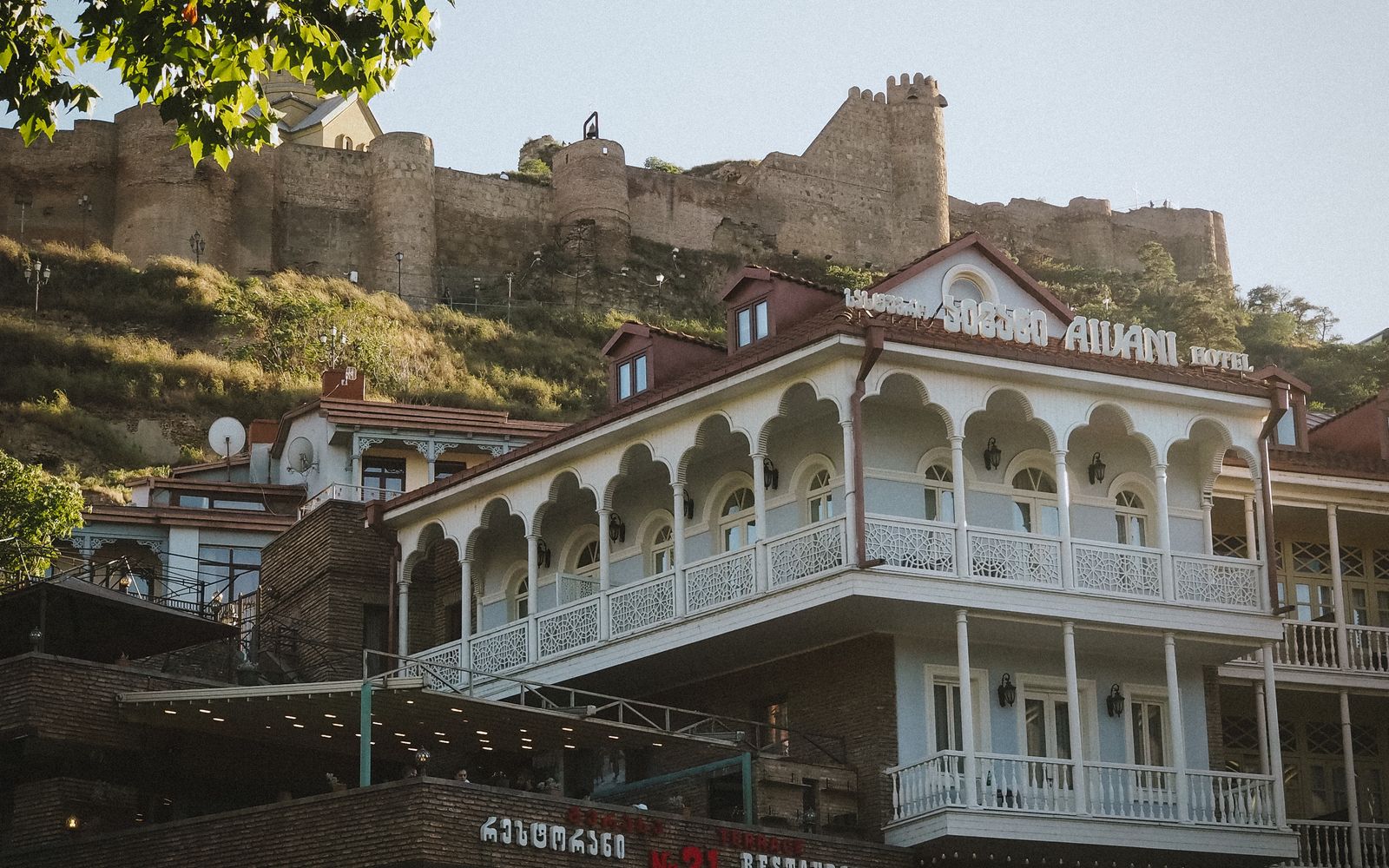
Can foreigners buy property in Georgia?
Yes — and with remarkably few strings attached. Foreign nationals may buy and fully own residential and commercial real estate in Georgia on exactly the same terms as Georgian citizens. Ownership is freehold: you hold the title outright and indefinitely, not a lease.
You do not need a residence permit, a local company or a Georgian partner to buy. In most cases a valid passport is all it takes to register a property in your own name. The one meaningful restriction concerns agricultural land, which foreigners generally cannot own directly.
What you can — and can't — own
Apartments, houses, offices, shops, hotels and non-agricultural land are all open to foreign buyers without special permission. That covers the vast majority of what expats and investors are looking for, from a city-centre flat in Tbilisi to a sea-view unit in Batumi.
Agricultural land is the exception: direct ownership by foreigners is restricted. If farmland is central to your plans, it is usually structured through a Georgian legal entity — a step worth taking specific legal advice on before you commit.
The buying process, step by step
The Georgian system is fast and refreshingly transparent. A typical purchase runs through six stages: (1) shortlist a property and agree the price; (2) reserve the unit and sign a preliminary agreement; (3) run due diligence — an extract from the National Agency of Public Registry (NAPR) confirms the seller's title and reveals any mortgage, dispute or land-category issue; (4) obtain a Georgian tax identification number if you need one; (5) sign the purchase deed before a licensed notary, ideally on a bilingual contract you fully understand; and (6) register the transfer at the Public Registry, usually through a House of Justice.
Once submitted, registration into your name typically completes within one to four working days, after which you receive an official extract — your proof of ownership. The whole transaction can often be wrapped up in under a week.
Documents you'll need
For a straightforward apartment purchase you will generally need a valid passport, a Georgian tax identification number (sometimes called a PTIN), and proof of funds for the transaction. The deed itself is prepared by the notary and signed by both parties.
If you cannot travel, a notarised power of attorney lets a trusted representative — your agent or lawyer, for example — complete the signing and registration for you. Many foreign buyers purchase entirely remotely this way.
Costs and taxes when buying
Georgia's tax regime is a big part of the appeal. There is no purchase tax and no stamp duty on a property transaction. The state registration fee is modest — roughly 50 to 200 GEL depending on how quickly you want the title issued. Budget up to around 2,000 GEL for legal support if you use a lawyer for due diligence and paperwork; agent commission is typically about 3% and, on resale properties, is usually carried by the seller.
Annual property tax is zero for most individual owners: households below 40,000 GEL of yearly income are exempt. Above that, rates are tiered — broadly 0.05%–0.2% of the appraised value for incomes between 40,000 and 100,000 GEL, and up to about 1% above 100,000 GEL. Rental income for a registered residential landlord is taxed at a flat 5% of gross rent. Capital gains are taxed at roughly 5% only if you sell within two years of buying — hold longer and the gain is tax-free.
Residency through property investment
Buying can also open the door to living in Georgia. An investment of $100,000 or more in real estate can qualify you for a residence permit — one of the most accessible property-linked residency routes in the region. The permit is renewable and can, over time, lead to permanent residency.
The qualifying value is based on an official appraisal rather than simply the price you paid, so confirm the appraised figure before counting on residency eligibility.
Where foreigners buy: Tbilisi and Batumi
Tbilisi, the capital, is the year-round market. Foreign buyers gravitate to Vake and Saburtalo for modern apartments and quality of life, and to Sololaki and the Old Town for character properties near the historic centre. New-build prices in the city commonly sit in the low four figures per square metre in US dollars, with premium districts higher and outer areas more affordable.
Batumi, on the Black Sea coast, is the investor and short-let favourite: its seafront towers and aparthotels are popular for holiday rentals, and coastal pricing is broadly comparable to Tbilisi. Kutaisi and other cities offer lower entry points for buyers prioritising yield over prestige.

How to protect yourself
Georgia's registry is reliable, but a few habits keep you safe. Always verify the seller's title with a fresh NAPR extract, and check for mortgages, court disputes and the correct land category before you pay anything. Insist on a bilingual contract so nothing is lost in translation, and never wire a deposit before due diligence is complete.
Be especially careful with off-plan purchases: check the developer's track record and permits, and prefer projects with a clear delivery history. Working with a certified, accountable agent — rather than an anonymous listing — is the simplest way to avoid the common pitfalls.
How expathome.ge helps
Every property on expathome.ge is verified by our team before it goes live, and each listing is handled by a certified, multilingual agent who can guide you from first viewing to registered title. We arrange live video viewings for remote buyers, prepare bilingual contracts, and can coordinate the notary, translation and registration on your behalf.
Browse verified listings or talk to an agent who speaks your language — and buy in Georgia with confidence.
שאלות נפוצות
Can a foreigner own property in Georgia outright?
Yes. Foreigners can own apartments, houses and commercial property as full freehold, on the same terms as Georgian citizens. The main exception is agricultural land, which is restricted.
Do I need a residence permit or visa to buy?
No. You do not need a residence permit, visa or local company to purchase. A valid passport is normally enough to register property in your own name.
How long does registration take?
Transfer of title at the Public Registry usually completes within one to four working days, and the whole purchase can often be finished in under a week.
Is there property tax in Georgia?
There is no purchase tax. Annual property tax is zero for households under 40,000 GEL of yearly income; above that it is tiered up to about 1% of the appraised value.
Can I get residency by buying property?
Yes. A real-estate investment of $100,000 or more (by official appraisal) can qualify you for a renewable Georgian residence permit.
Can I buy without travelling to Georgia?
Yes. With a notarised power of attorney a trusted representative can sign and register on your behalf, so many foreigners buy entirely remotely after video viewings.
This guide is general information, not legal or tax advice. Rules and thresholds can change; confirm the current position with a qualified Georgian lawyer or tax adviser before you transact.