The Constitutional Ban Explained
Georgia amended its constitution in 2018. The amendment declared agricultural land a resource of special importance, restricting ownership to the state, self-governing entities, Georgian citizens, or unions of Georgian citizens.
This change imposed a moratorium on foreign individuals purchasing and holding freehold title to land designated as agricultural.
This change does not affect a foreigner's right to own residential or commercial property (apartments, townhouses, commercial buildings, non-agricultural land), which remains fully protected.
What Defines 'Agricultural Land'?
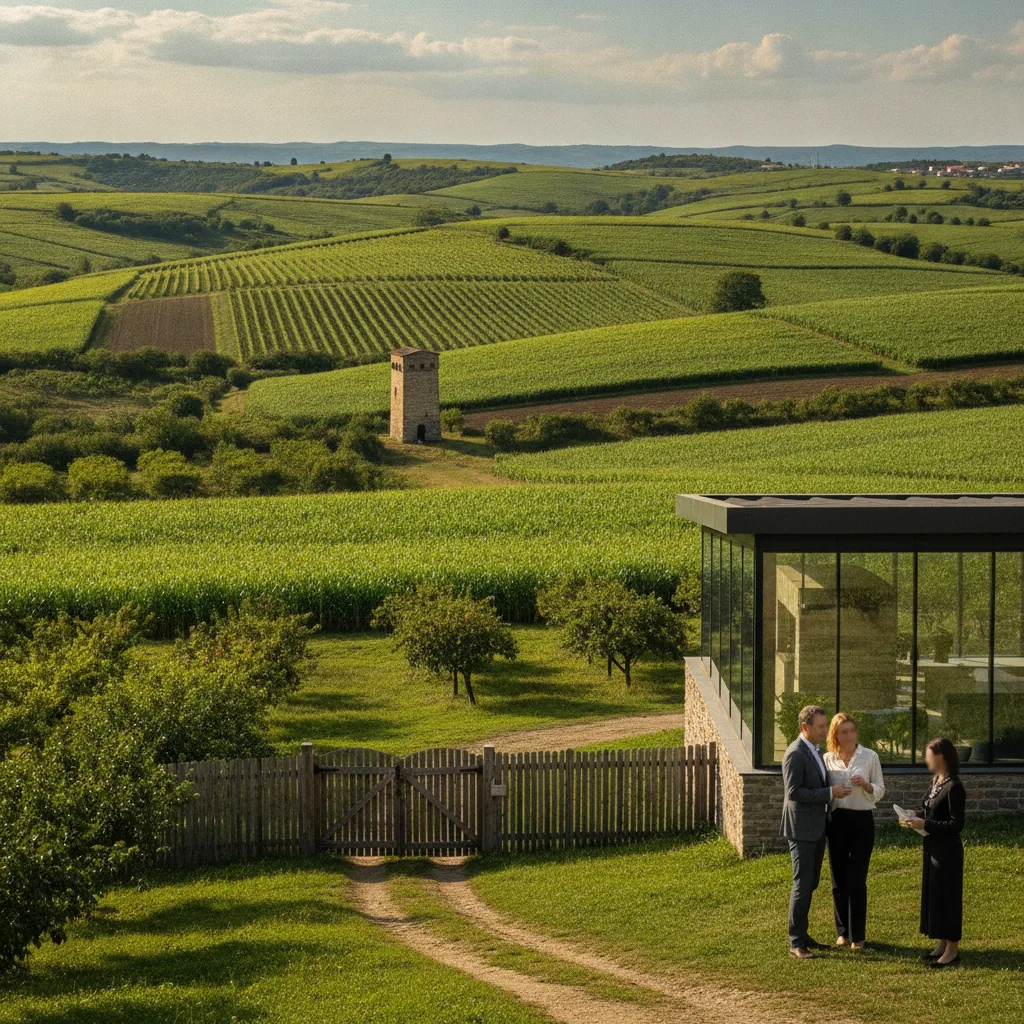
A land plot's status is not determined by its appearance or current use. Its classification as agricultural or non-agricultural cannot be visually assessed.
The sole determinant is its official designation in the National Agency of Public Registry.
Before any purchase, your lawyer must obtain an official extract for the property. This document explicitly states the land's status—either 'agricultural' or 'non-agricultural'.
A rural plot with a house on it might be classified as non-agricultural, while a vacant lot near a city could be designated agricultural.
The extract serves as the definitive record.
Using a Georgian Company to Own Land
Foreigners typically acquire agricultural land by founding a Georgian company, usually a Limited Liability Company (LLC).
A foreign citizen can be the 100% director and shareholder of a Georgian LLC. This company, as a Georgian legal entity, is permitted to purchase and own agricultural land.
While this approach is legally sound, it introduces administrative responsibilities.
You will need to register the company, obtain a legal address, and file annual financial declarations.
This usually requires hiring a local accountant, with typical costs running from 300-500 GEL per month, depending on the company's activity.
These ongoing costs and administrative duties are the main tradeoff for using this structure.
Changing a Plot's Official Status
In some cases, it is possible to apply to have a plot's status changed from agricultural to non-agricultural.
This process is handled by the local municipal government where the land is located. The owner must submit an application, often with a detailed plan for what will be built on the property, such as a specific residential house project.
Success is not guaranteed.
The decision rests with the municipality and depends on its master plan, zoning regulations, and the specific location of the plot.
The process can be bureaucratic and take several months.
It is generally more feasible for smaller plots on the edge of developed areas than for large tracts of farmland in the open countryside.
Exceptions: Inheritance and Special Cases
The law provides an exception for inheritance. A foreign citizen who inherits agricultural land is permitted to take ownership.
However, they are legally obligated to sell the property to a qualifying Georgian citizen or entity within a prescribed timeframe.
This prevents the long-term holding of inherited agricultural land by foreigners.
There are also provisions for exceptional cases, where the government might grant ownership to a foreign entity for a significant investment project.
These are extremely rare, involve high-level negotiations, and are not a practical path for typical investors or individuals.
Your Next Steps
For any land purchase beyond a standard city apartment, first confirm the land's legal status. Do not proceed with a deposit or agreement until you have seen the official Public Registry extract and had it reviewed by a qualified Georgian lawyer.
If the land is agricultural, and you wish to proceed, your lawyer can guide you through the process of setting up a Georgian LLC.
This is a routine procedure, but it must be done correctly to ensure your ownership of the company, and therefore your control over the land, is secure.
FAQ
So I can just form a company and buy a vineyard?
Yes, your Georgian-registered company can purchase the vineyard. You would own and control the company, which in turn owns the land. You will be responsible for the company's annual tax filings and administrative upkeep.
I'm buying a house with a large garden. Is that agricultural land?
It depends entirely on its official status in the Public Registry, not its size or appearance. Many village houses with gardens are on land designated 'non-agricultural'. You must check the property's official extract to be sure.
Can my Georgian spouse buy agricultural land?
Yes, as a Georgian citizen, your spouse can purchase and own agricultural land in their own name. The property would legally belong to them as an individual, not to you or to you jointly, unless a separate marital contract specifies otherwise.
Is the government likely to change this law back?
The restriction is part of Georgia's constitution. Amending the constitution is a difficult and lengthy political process. There are no serious discussions or plans to reverse this law at present.
This article is for informational purposes only and does not constitute legal or tax advice. Consult with a qualified professional for your specific situation.