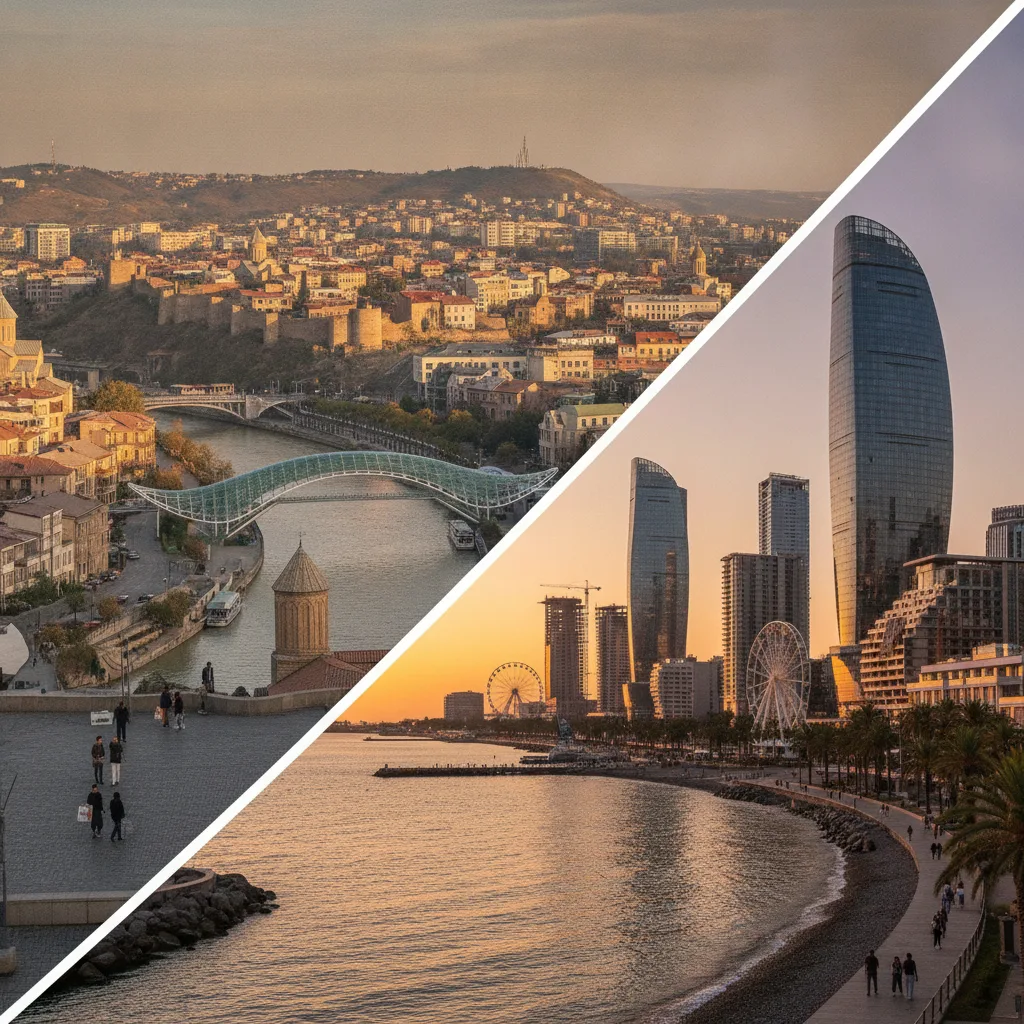
Property Prices and Market Character
Tbilisi's property market shows maturity and diversity. New builds in central districts like Vake and Vera sell for $1,800 to over $3,000 per square meter. In mid-tier areas such as Saburtalo, new apartment prices typically fall between $1,200 and $1,800/sq.m. Local and foreign buyers drive this market, seeking primary residences and long-term rental investments.
Batumi's property market focuses heavily on its coastline. Apartments on the first line, offering direct sea views, can cost $1,500 to $2,500/sq.m, prices comparable to central Tbilisi. Just a few blocks inland, prices often drop to $800-$1,200/sq.m. The market largely consists of investor-focused, hotel-style apartments built for short-term rentals.
Rental Income and Occupancy Realities
Tbilisi investors usually aim for long-term rentals. Universities, corporate offices, and a large expat community provide consistent year-round demand. A well-located apartment can achieve a net rental yield of 6-9% annually. Occupancy rates remain stable, unlike the seasonal fluctuations seen in tourist destinations.
Batumi operates as a short-term rental market. Between June and September, daily rates are high, and occupancy can exceed 90%. This period often accounts for a large part of the year's rental income. From October to April, demand drops sharply. Landlords frequently offer deeply discounted monthly rates to cover expenses, and vacancies are common. While total annual yields might match Tbilisi, the income stream is less predictable.
Registered residential rental income in Georgia is taxed at a flat 5%. Capital gains on the sale of a residential property are taxed at 5% if sold within two years of purchase and 0% if sold after two years.
Comparing Daily Living Expenses
Overall living costs are similar, though some differences exist. Major supermarket chains such as Carrefour or Agro-Hub price groceries almost identically in both cities. Local farmers' markets also offer comparable value for fresh produce.
Dining out and transportation costs vary more. A mid-range restaurant meal in central Tbilisi might cost 40-50 GEL, compared to 30-40 GEL in Batumi. Tbilisi offers a metro system; a monthly transport pass costs 30 GEL. Batumi uses buses and marshrutkas, which are also inexpensive, but the city is generally more walkable. Ride-hailing apps like Bolt operate in both cities with similar pricing.
Lifestyle, Climate, and Infrastructure
Tbilisi provides capital city amenities, including more international schools, specialized medical facilities, and the country's main international airport (TBS) with year-round global connections. Its continental climate brings hot summers and cold, sometimes snowy, winters. Cultural life remains active year-round, with theaters, museums, and events.
Batumi's lifestyle reflects its subtropical climate and Black Sea location. Winters are mild and wet; summers are hot and humid. Life slows considerably outside the tourist season. Infrastructure has improved, with a modern airport (BUS) and new shopping malls. However, Batumi remains a smaller city with fewer non-tourist amenities than the capital.
Investment-for-Residency Considerations
Foreigners can apply for a one-year renewable residence permit by buying real estate with an appraised value of $100,000 USD or more. This option applies to property in both Tbilisi and Batumi. The official valuation report from an accredited appraiser is the key factor, not the contract's purchase price, though these figures are often similar.
An investor might select Tbilisi for a stable asset in the country's economic center. Those choosing Batumi might prioritize a lifestyle purchase or a seasonal rental business. The permit process and requirements do not change based on the city.
FAQ
Is it possible to buy property in Tbilisi or Batumi remotely?
Yes. Foreigners can grant a Power of Attorney (PoA) to a legal representative in Georgia. This document must be notarized and, if done abroad, apostilled or legalized for use in Georgia. Your representative can then sign contracts and register the title at the Public Registry on your behalf.
As a foreigner, can I get a mortgage from a Georgian bank?
It is extremely difficult. Most Georgian banks do not offer mortgages to non-resident foreigners. The vast majority of property purchases by foreigners are made with cash or funds transferred from abroad.
What are the annual property taxes like?
Annual property tax depends on household income. If your worldwide household income is under 40,000 GEL per year, you pay 0% property tax. For income between 40,000 and 100,000 GEL, the rate is 0.05%-0.2%. For income over 100,000 GEL, the rate is between 0.8% and 1% of the property's assessed market value.
Which city is generally better for a family with children?
Tbilisi generally has more options for families, including a larger number of international schools, more pediatric specialists, and a wider variety of extracurricular activities for children year-round.
This article is for informational purposes only and does not constitute legal, financial, or tax advice. Please consult with a professional before making any investment decisions.