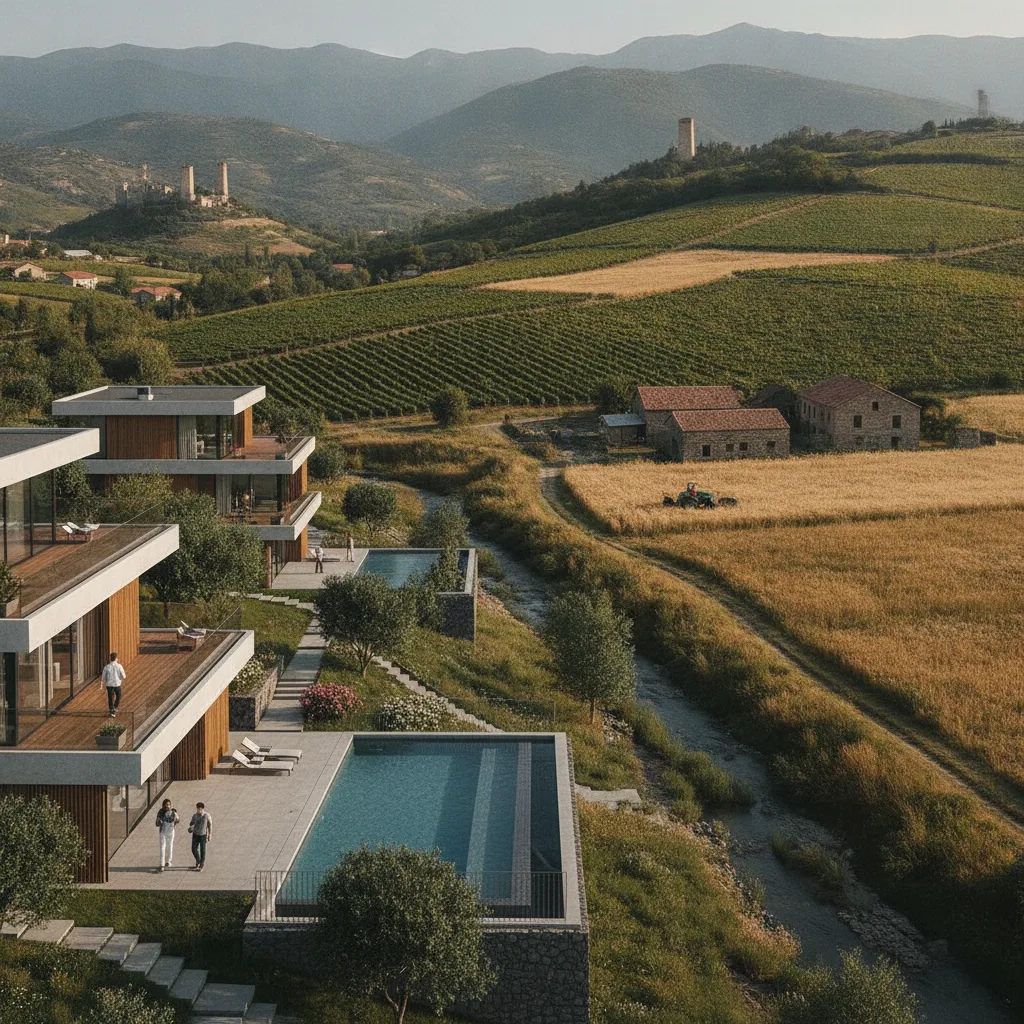
The Crucial Distinction: Agricultural vs. Non-Agricultural
Georgia's Constitution restricts agricultural land sales to foreign citizens. This rule is strict: any land officially designated 'agricultural' (სასოფლო-სამეურნეო) cannot be bought by non-Georgian passport holders.
Non-agricultural land (არასასოფლო-სამეურნეო), however, is open to all buyers, regardless of citizenship. This includes plots for homes, apartment buildings, hotels, or industrial facilities. The official designation matters, not the land's current look. A vacant, overgrown plot inside city limits is likely non-agricultural; a well-maintained field outside a village is almost certainly agricultural.
Verify any plot's status on the National Agency of Public Registry website (napr.gov.ge). Enter the property's unique cadastral code to download an official extract. This document clearly states the land's purpose. This check is crucial due diligence before any money changes hands.
The Purchase Process Step-by-Step
Once you identify a plot and confirm its non-agricultural status, the purchase process is straightforward. First, you and the seller agree on a price and terms. Verbal agreements are common in Georgia, but a simple preliminary written agreement offers more protection.
The transaction happens at a Public Service Hall or House of Justice. Both buyer and seller (or their legal representatives with a Power of Attorney) must attend. If you do not speak Georgian, a certified translator must be present for the signing. The state registrar drafts the final purchase agreement in Georgian. For extra protection, consider having a lawyer prepare a bilingual contract beforehand, to be signed alongside the official document.
Payment usually goes directly to the seller at signing. Bank transfers are the most secure method, as they create a clear transaction record. Large cash payments, often in US dollars, are still common but carry clear risks. After payment confirmation, you and the seller sign the application, and the registrar submits the title for registration. The standard process takes four working days; an expedited one-day service costs more.
Changing Land Status: A Possibility, Not a Promise
Converting a plot from agricultural to non-agricultural status is sometimes possible. This is not a simple administrative task; it requires a formal request to the local municipal government. The outcome is never guaranteed.
Success often depends on the plot's location and the municipality's development master plan. A plot within a town's defined boundaries or a designated development zone has a much higher chance of approval than an isolated field. You must submit a reasoned application, often with a plan for the land's intended use, like a house blueprint or a commercial project's business plan.
The process can take several months, and the municipal council may deny the request. Incurring legal and architectural fees for a rejected application presents a real financial risk. Pursue this path only with guidance from an experienced local lawyer familiar with the specific municipality's procedures and tendencies.
Associated Costs and Ongoing Taxes
Georgia imposes no stamp duty or transfer tax on real estate purchases. The main government fee is for title registration: 50 GEL for the standard four-day service or 200 GEL for the one-day expedited service.
If you hire professionals, lawyer fees for a standard purchase typically range from $300 to $1,000. Real estate agent commissions, usually paid by the seller, are around 3-5% of the property value.
Annual property tax on land is low. The local municipality sets the rate, calculated from a base rate per square meter that varies by location. In Tbilisi, for example, rates can range from 0.05 GEL to 1.2 GEL per square meter, depending on the zone. For most individuals, the total property tax bill is small. Households with a declared annual income below 40,000 GEL are entirely exempt from property tax.
FAQ
Can buying land qualify me for a Georgian residence permit?
Yes. An investment in real estate, including an empty plot of non-agricultural land, with an officially appraised market value of at least $100,000 USD can be a basis for applying for a one-year renewable investment residence permit.
How do I confirm the seller is the true owner?
The extract from the Public Registry (napr.gov.ge) is the definitive source for property ownership in Georgia. It lists the current registered owner(s), cadastral code, land size, and any encumbrances like a mortgage or lien. Your lawyer must check this immediately before signing.
What is a 'cadastral code'?
It is a unique identification number assigned to every plot of land and property in Georgia. This code is essential for all real estate transactions and for looking up property details on the Public Registry.
Are there restrictions on what I can build on my non-agricultural land?
Yes, local zoning regulations and building codes apply. Before purchasing, check with the local municipality's architectural department for restrictions on building height, density (known as the K-2 coefficient), or setbacks from the property line. This is particularly important in historic districts or areas with specific development plans.
This article provides general information and does not constitute legal or tax advice. Consult with a qualified professional for your specific situation.